Jargon Buster


GAME Content: Jargon Buster

Don't know your D-pads from your Dungeons? Mixing up your RPGs and QTEs? Think WoW is a toothpaste brand? Not to worry – our Jargon Buster will get you up to speed in the oft-confusing world of gaming language.

Think we've missed something vital? Submit your own jargon!

A.I. - Artificial Intelligence
The level of intelligence in computer-controlled characters. A good example of great A.I. would be the Halo franchise.

Action-Adventure
A story-based Adventure game with added action, often spanning puzzles, set pieces, shooting, melee combat, and cutscenes. Tomb Raider, Metal Gear Solid and Resident Evil are all vastly different examples.

Avatar
Your virtual on-screen representation. Can range from being the main character in a story-driven game, aka Lara Croft, to a self-created virtual persona which embodies you within the gameworld, such as in World of Warcraft.

Beat 'Em Up
A game in which fighting is the main focus on the action.

Comes in two main flavours: 1v1 Beat Em Ups (Tekken, Virtua Fighter) and Scrolling Beat Em Ups, such as MegaDrive classic Golden Axe and, more recently, games like Sony's God of War.

Beta
An unfinished, work-in-progress version of an unreleased game, released for testing purposes.

Beta tests often take place behind closed doors – though some, like 2007's Halo 3 Beta, offer a limited public version of the game to test player reaction and gain feedback.

Bullet Time
Slow motion sequences where bullets fly at their targets in cinematic Matrix-esque fashion. Used first in a game famously in Max Payne and, more recently, in John Woo’s Stranglehold.

Button-Mashing
Also called Button-Bashing.
Button-Mashers hammer buttons repeatedly in Beat ‘Em Ups in the hope of winning not by skill, but by fluke or attrition.

C&C
Abbreviation of the genre-defining RTS Command & Conquer.

Camp
To stay in one place in a multiplayer shooter and kill unsuspecting enemies as they pass by. Generally frowned upon, but difficult to combat.

Cutscene
A cinematic sequence which helps further the story without giving the player direct control. Heavily used by the major storytelling genres; Action-Adventures (Metal Gear Solid, for instance) and RPGs (Final Fantasy, etc), for setting the scene and presenting plot twists.

Semi-interactive cutscenes, in which the player presses buttons as prompts appear on screen, are called QTEs.

Deathmatch
A kill-or-be-killed multiplayer gametype in Shoot-Em-Ups played in either free-for-all or team variants.

D-Pad - Directional Pad
The name for the standard digital cross-like control input on the left of control pads.

Dungeon - also: Temple, Castle
The action-oriented, puzzle-packed parts of RPGs and MMORPGs, usually finished by an elaborately large boss battle and proffering new, sought-after treasures, weapons and/or skills.

Epix
In World of Warcraft, loot that is of Epic quality. 'Epic' is the second highest classification of item, and what most maximum-level players strive for.

First Person / Third Person
The viewpoint from which a game is played.

First-person means seeing the game from behind the character's eyes, such as in Halo, Half Life and Metroid Prime.

Third-Person views are set outside of the character, such as in Gears of War or Tomb Raider.

FPS - First-Person Shooter
Shooters which are viewed from the character's own eyes, including Halo and Call of Duty. Particularly popular on Xbox 360 and PC.

FPSAS
The Four-Player-Simultaneous-Action-Superhero genre, as created by the Fantastic Four videogames.

Frag
A kill in a multiplayer shooter.

Gameplay
A general term that's difficult to define, but on the whole relates to the way a game responds to a player's control, and how enjoyable the overall experience proves as a result.

Genre
The category a game belongs to, such as Action, Shooting or Racing.

Gib
To Frag someone in a shooter by completely blowing up their body is called Gibbing.

Hack
To cheat at a game by manipulating the code which holds it together and breaking its fundamental rules. Hacking is frequently found in online games, where the 'Leet Speak' term for an elite (accomplished) hacker is '1337 Hax0r'.

HUD - Heads-Up-Display
The vital information which sits on top of the playing screen – including health, ammunition, and map – is together called a HUD.

In-game camera
The viewpoint from which you play a 3D game is often controllable in the game, like film directors control a camera.

Instance - see also: Dungeon
A version of a part of a gameworld which the game creates specifically for a small party of adventurers to experience together.

In MMO's like World of Warcraft, large numbers of players share the same hub areas to meet up, talk, and form small parties – then these groups venture into their own individual instances to battle monsters, vanquish evil, and generally have an awesome orc-bashing time.

Joypad - also: Joystick
The retro name for today's standard gaming control input, the control pad. Joysticks are the self-explanatory stick-shaped alternative.

Killer app - Killer application
A game that’s so good it practically defines its machine and deserves to sell the system all on its own. (Halo 3 on Xbox 360, Super Mario Galaxy on Wii, etc).

Leet / 1337
A colloquialism of 'Elite' frequently used by gamers (often in a tongue-in-cheek way) as a label to make themselves seem a superior player.

1337 is the geek-speak form, where letters are replaced by numbers.

Leet Speak, meanwhile, is the term for this method of replacing letters in words with numbers and other symbols.

Mi-i-i-i-i-i-i-i-i-i-i-i-i-i-k-e! - Also: Miiiiiiiiiiiiiike! and MIIIIIIIIIIKE!
Resident Evil 4's Mike is a fave injoke here at GAME HQ. He's one of those rare characters that transcends his game – despite the fact that you only learn his name five minutes after meeting him, as his helicopter erupts in a spiralling fireball of rocket-propelled fury.

Short but sweet, every impromptu videogame character death from now on shall be henceforth known as a 'Mike moment'.

MMO - Massively Multiplayer Online
MMO games are played online and support hundreds of players in a persistent world.

MMORPG - Massively Multiplayer Online Role-Playing Game
A fully realised, living, breathing online world which exists in its entirety in real-time, allowing players to quest and develop their character, no matter where they are within it at any one time.

The gameworlds of MMORPGs like World of Warcraft's Azeroth and The Lord of the Rings Online's Middle Earth are online persistent worlds.

N00b - Newbie
Leet speak term for amateur or beginner.

Open World
A vast, go-anywhere, do-anything gameworld with no loading screens between areas, in which players can follow the main story objectives, or simply explore off the beaten track and play with the game's features and sidequests. Includes games like Crackdown and the Grand Theft Auto series.

Persistent World
Where most games only load the player’s immediate environment in a level-based structure, a persistent world exists in its entirety regardless of where you are within it.

A persistent world is teeming with activity – so, much like real life, even if you are in one area doing one thing, other things are going on in other places at the same time that you aren’t there to see.

This makes the persistent worlds of MMORPGs like WoW a fascinating virtual ecology.

Platformer
A game based largely around controlling an avatar to run and jump onto platforms to reach an end-of-level goal or complete an objective. Includes the Mario and Sonic series.

Polygons
The graphical building blocks of 3D games. As a general rule, more polygons = greater detail, with more powerful gaming systems (PS3, Xbox 360, high spec PC) able to produce more polygons.

PVE / PVP
In MMORPGs like WoW, some servers are Player-vs-Environment in which players only battle computer-controlled enemies in the gaming environment, and some are Player-vs-Player, allowing individual gamers to battle each other as well. Players choose based on personal preference.

Pwn / Pwn3d - "Owned"
The Leet Speak term for the word 'own', used in the context that 'owning' someone at a competitive game is to beat them comprehensively.

QTE - Quick-Time Event
Reaction-testing interactive cutscenes in which players press buttons as prompts appear on the screen in order to effect the outcome of the sequence.

Introduced in Sega's Dreamcast and Xbox classics Shenmue and Shenmue II, QTEs have been widely used in the likes of Resident Evil 4 and Spider-Man 3.

Random Battle
In Japanese RPGs like Final Fantasy and Dragon Quest, turn-based battles traditionally occur at random, with the game's adventuring suddenly giving way to the battle screen.

Real-time
Has many contexts in a videogame sense, but overall means that something is happening without a time delay, as if the game presents a believable reality happening before your eyes.

Real-time combat, for instance, means you have to instigate and react as the fight happens – as opposed to turn-based combat, which gives you pause for thought.

Likewise, a real-time world presents actions happening all around you, either pre-programmed (See: Open World) or player-enacted (See: Persistent World).

RPG - Role-Playing Game
A genre in which players undertake an epic quest, building their character(s) skills and items on a mission to ultimately stop a great evil.

Singleplayer RPGs include the Final Fantasy series, Neverwinter Nights and Nintendo's Zelda, and often last over 30 hours.

Multiplayer RPGs are frequently played online, factoring in real-time combat and a teamwork dynamic. These include Guild Wars and World of Warcraft.

RTS - Real-Time Strategy
The recognised abbreviation for the Real-Time Strategy genre which calls the PC its home. Championed by Company of Heroes, Supreme Commander and Command & Conquer.

Rushing
The opposite of Turtling.

Playing in a hurried, frenetic manner. In the RTS genre, a 'rusher' is someone who goes straight for the jugular and attacks the enemy base right away, hoping to catch them off guard.

Sandbox
A sandbox game lets players play the way they choose by presenting numerous gameplay options - in the same way a real sandbox lets children play the way they want to within it. An ideal example is Grand Theft Auto, which contains driving, shooting and other game styles. (see also: Open World)

Sandbox gameplay is a term for choices within a certain type of gameplay; i.e: being able to approach enemies in a shooter like Halo 3, or use tactics in a sports game like FIFA, in multiple different ways.

Ultimately, the defining characteristic of something 'sandbox' is that different things happen each time you play.

Server - see also: PVE / PVP
MMORPGs have many versions of the same gameworld, offering players slightly different rules in each. These are called servers.

Players choose which server to play on based on their preference for PVP or PVE, and also where their existing online friends frequent.

Set Piece
A pre-scripted event which takes place in front of you as you play. Used to heighten drama as well allowing you to progress in the game.

A good example would be an explosion suddenly happening before your eyes in a first-person shooter, which both surprises you, and opens a new route through the level.

Shenmue
Seminal Sega Dreamcast Action-Adventure that's still a shining example of its genre and credited with giving games the QTE. The sequel, Shenmue II, was later released on Xbox. A third instalment is still to this day highly desired by fans. Us included!

Spawn / Respawn
To 'spawn' is to come to life. 'Respawn' means to come back to life following an in-game death. Particularly relevant to multiplayer shooters.

Sprite
A 2D image constructed from pixels. Sprite is also sometimes used as a synonym for 'avatar'.

Survival Horror
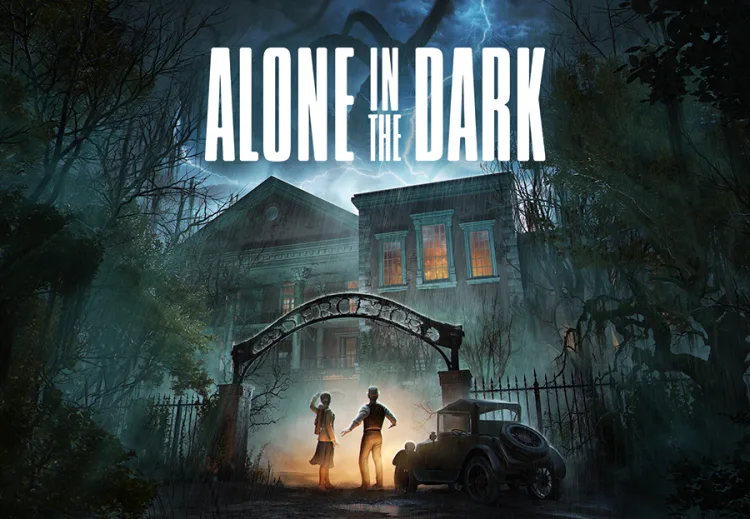
Sub-genre of the Action-Adventure genre in which the presentation, themes and story of the game are horror styled. The term 'Survival Horror' was coined by the Resident Evil series, and also includes games like Silent Hill, Project Zero, and the series which those three all took inspiration from, Alone in the Dark.

System Link / LAN
Two or more consoles / PCs connected together for the purpose of multiplayer gaming.

Tech / Technology Tree
Typically found in Management, RPG and RTS games, a Tech Tree is a visual representation (often viewed like a flow chart) of the route a player can choose to take to developing specialist skills or resources as the game progresses.

As a very basic example, if you develop the wheel at the beginning of the game this will eventually lead you to creating motor transport. Likewise, choosing to develop a rudimentary flint pickaxe instead will lead to you later getting the chance to develop advanced mining technology, for instance.

Turn-based battle
A combat system favoured in Japanese RPGs like Final Fantasy. Player characters and enemies take turns to damage to each other, while maintaining their own health.

Simplistic on the surface, large-scale turn-based battles against powerful foes can be deeply tactical and immensely satisfying.

Turtling
The opposite of Rushing.

Taking a slow, tactical and considered approach to gaming. 'Turtling' is a term frequently used in the RTS genre, where a 'turtler' will methodically build up their forces and strategically plan the best way to defeat their enemy's army.

Wiimote
An abbreviation for the Wii Remote.

Wi-Fi
A wireless network connection used by compatible hardware. Nintendo's DS and Wii, plus Sony's PS3 and PSP are all Wi-Fi compatible, while the Xbox 360 has a Wi-Fi Adaptor accessory.

WoW - World of Warcraft
The well-known abbreviation of Blizzard's epic award-winning MMORPG PC title World of Warcraft.

Contrary to what some toothpaste ads would have you believe, WoW has little – if anything – to do with baking soda.


Shopping basket

Your Shopping Basket is empty.


GAMERewards

Welcome Guest,

use your Reward Card to save even more!
Close

Reward card help

Earn Points every time you shop with a Game Reward Card. You can save money off your future orders!
Find out more


Find out more